Your welcome flow should route the offer, not just the copy
Shopify welcome flow personalization works when the first offer changes based on intent. Start with four signals your store already sees before signup.
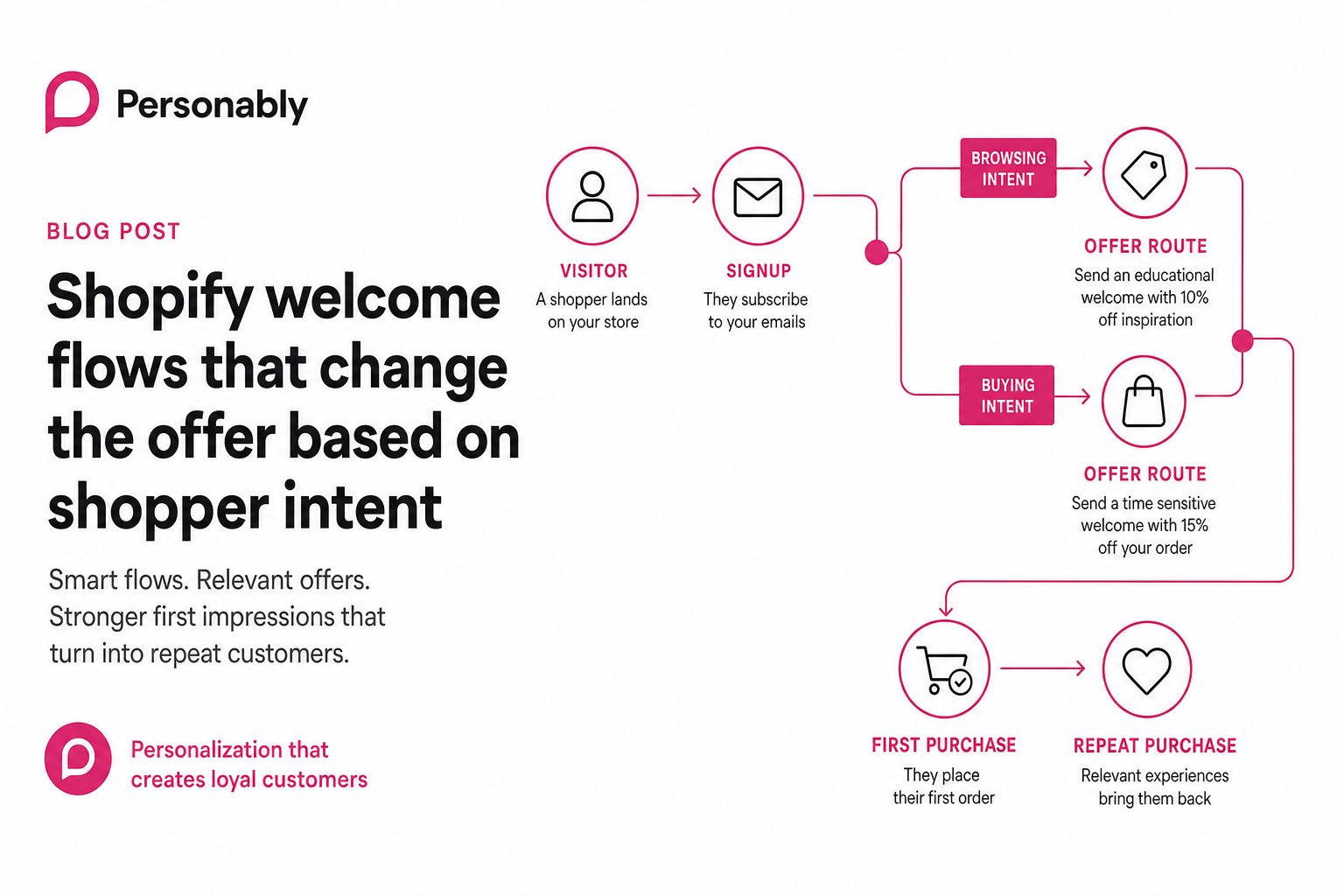
Shopify welcome flow personalization should change the first offer based on what the shopper just showed you. It should not stop at a first-name merge tag or one blanket discount. Use four signals your store already sees before signup: research depth, cart speed, category focus, and offer sensitivity. Those signals tell you whether the next email should build trust, reduce friction, mirror a category, or make a controlled incentive.
This matters because the welcome flow is the first place a new subscriber decides what kind of relationship the brand is asking for. If every path begins with the same coupon, you are not just giving margin away. You are teaching full-price buyers to wait and leaving careful shoppers without the proof they needed to buy.
Why the same discount breaks the welcome flow
Most stores build welcome flows around the easiest available branch: new subscriber gets email one, waits a day, gets email two, waits again, gets a stronger reminder. That structure is simple, but it misses the important part. Two shoppers can submit the same form after doing completely different things.
One person read three education pages, compared two products, and joined because they wanted a buying guide. Another added an item to cart after one product page and joined because the popup appeared. A third bounced between sale products and discount code pages. Sending all three the same welcome coupon is not personalization. It is a workflow that cannot hear the difference.
The better question is not, what copy should everyone get first? The better question is, what did this shopper need next before they gave us their email? That one shift turns welcome flow personalization from decoration into judgment.
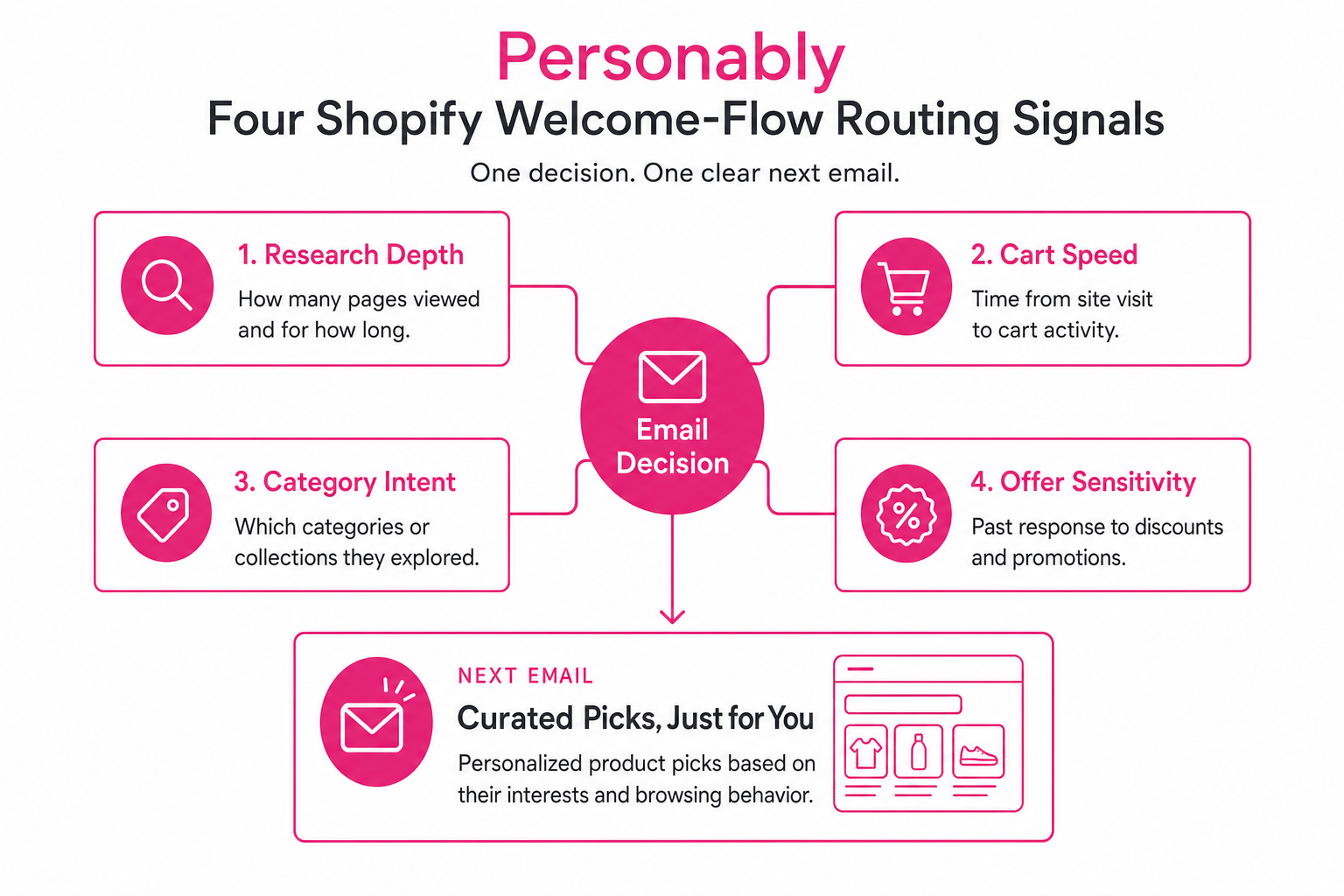
What signals should route the first offer?
Start with signals that a founder or retention lead can understand without opening a data science notebook. The first version should be readable, testable, and easy to override when the brand context changes.
- Research depth: product pages, guides, FAQs, ingredient pages, comparison pages, or reviews before signup. This shopper probably needs proof before a stronger offer.
- Cart speed: cart or checkout behavior in the first session. This shopper is already close, so the welcome email should remove friction and confirm the next step.
- Category focus: repeated browsing inside one product family. This shopper should see examples, claims, and social proof that match the category they cared about.
- Offer sensitivity: sale-page visits, discount-code searches, or repeated price filtering. This shopper may need an incentive, but the incentive should not become the default path for everyone.
These are not magic signals. They are practical ones. They exist in the storefront and email platform already. The work is deciding which one should win when multiple signals appear at once.
How should the branches sound to the shopper?
The branch should change the promise, not just the product block. A researcher does not need a louder coupon. They need confidence. A cart starter does not need a brand manifesto. They need a reason to finish while intent is fresh. A category-focused shopper does not need the full catalog. They need the narrow version of the story they already raised their hand for.
For a skincare brand, that might mean sensitive-skin researchers get a proof-led email about ingredients and returns. A cart starter gets a short note about shipping, guarantees, and what happens after purchase. A sale-page browser gets a single controlled offer with clear limits. Same welcome flow, different job.
The copy gets more human when the rule is specific. Instead of, Welcome to the brand, here is 10% off, the email can say, You were comparing the sensitive-skin set. Here is the simple version: start with the cleanser, skip the exfoliant for two weeks, and reply if your skin reacts. That sounds like a person because it responds to a real moment.
What should you test first?
Do not rebuild the whole welcome series. Pick one branch that appears often enough to measure and important enough to matter. For most stores, that is cart speed or category focus. Keep the current generic path as the control. Send the new branch to a measured group. Watch first-purchase rate, order quality, and whether the branch changes repeat behavior later.
Open rate is not enough. A subject line can win attention and still train bad buying behavior. Click rate is not enough either. The branch should be judged by whether it moves a shopper toward the right first purchase without making the brand sound automated.
Where Personably fits
Personably helps Shopify stores turn first-session behavior into welcome flow rules a founder can actually approve. The point is not to build a giant automation map. The point is to make the first email feel like it noticed the shopper without getting creepy, generic, or hard to manage.
If your welcome flow sends the same offer to every new subscriber, start with the free audit. It will show which branch your current flow is missing and which first test is worth running before you rewrite everything.
Keep reading
The personalization paradox: why more customer data makes your emails feel less human
Stores collect more browsing data, add more merge tags, and build more segments. Their emails get worse. The fix is not more data. It is knowing which signal matters for this specific email.
The four shopper signals your welcome flow should notice first
A practical guide to the first-party browsing signals founder-led Shopify stores can use to make Klaviyo welcome flows feel more personal without adding complexity.